The Human Cost of the National Security State
This article was made by Netanya Weinberger. You can talk with her on our Discord!
I’d like to begin with a story.
Monday, April 13th, 2026, my family and I arrived in Houston after a well-deserved vacation in Belize. I was at the height of my paramedic schooling, my siblings were nearing the ends of their school years, and my father had been saving up for this vacation for months. I had to, for lack of a better term, beg my instructors to allow me a couple of days off from school because I only had a week off and the vacation bled into the return to school. I explained that this would be the first time on vacation with my family since I had returned from the Ukrainian army less than a year prior, I hadn’t missed a single day of school the entire year, and my grades were stellar. My instructors reluctantly allowed me that time and gave me assignments to recoup the lost days. Concurrently, I was working 12 hours a week at one EMS squad and was volunteering 12 hours every other week at another agency. Both of which I risked not meeting my monthly minimum of hours due to this break, so I had to beg for leniency from them as well. When the stars aligned and I got the blessing from all obligations and duties to go on vacation, I was elated. I had missed the past few vacations with my family due to my time in the army, and now I could spend time with my 4 younger siblings and my father to compensate for the time I had lost.
The vacation was beyond perfect, and I even got a job offer by the island’s EMS agency. But of course, all good things come to an end, and it was time to go home. I was nonetheless satisfied and ready to return to the grind of adult life. We flew a short uneventful flight from Belize’s Philip S. W. Goldson International Airport to Houston Intercontinental Airport and began the kafkaesque proceedings through international arrivals. I am an experienced traveller, so it is merely an inconvenience for me: stand in long lines, answer questions, walk further, stand in more lines, et cetera. Once we got to the passport check, however, the usual misery of airport security took a turn. The rest of my family was waved through, but the otherwise disengaged CBP agent at customs said I had to report for further inspection. Instantly I knew what had happened, since it had happened twice prior. The first time this occurred was when I was returning from Ukraine, in Dublin before my flight home. I was pulled aside for further inspection and interrogated by CBP and HSI for my activities in the Ukrainian military.
They were, however, extremely respectful and accommodating. Mostly, I got the impression that they were curious about what I did over there. I was bringing some of my equipment home, and they didn’t give me a hard time. They asked their questions, did their paperwork, and sent me on my way to catch my flight. The second time was when I was bringing my friend and comrade home from Ukraine to Canada. After I had brought him home, I was driving across the border when I was, again, stopped and detained for further inspection. I immediately told them in front of the entire CBP station that I had just done this in Dublin and had no interest in being held up for hours while they asked me the same questions again. They let me go after searching my car, and I thought that would be the end of it. Over the next few months, I would have the occasional run-in with law enforcement. HSI showed up at my mother’s house, my father’s house was raided by the DEA, my body armor and my father’s rifle were seized by New York State Police (and later returned), I was followed by ICE, and various other incidents that have blurred together.
This time, though, something was noticeably different. I was escorted away from my family to a windowless and nondescript room behind multiple locked doors and layers of security. Finally, in this room with a handful of CBP agents but no one else, I was directed to sit in a chair and wait for further instructions. My every move was watched and scrutinized by the agents, and multiple signs around the room said that phone use was forbidden. After a couple of minutes, a female agent asked me where my bags were because they needed to search them, and I said I didn’t have any. She called me a liar and again demanded to know where my bags were. I again said I didn’t have any, which was technically true. I came with family, my personal items were split up among the multiple bags we brought. She laughed at me, called me a liar again, and began trying to make phone calls to track down my family and seize all of our bags. I rolled my eyes. A burly agent who sat at the desk next to her told me not to be disrespectful, and I couldn’t help but laugh. According to my family later, they were never intercepted, so I don’t know if she was told that she couldn’t do that by a superior or if CBP simply failed to intercept my family. Either way, it was an extremely bad sign.
As a side note, I noticed Fox News on the TV in the CBP office. The host was talking about the latest successes of ICE and CBP in “keeping America safe from criminals” while I had committed no crime at all. I waited 5 or 10 minutes in this office until I was called into a smaller office with an interviewing agent behind a computer. I was clearly frustrated and worried about missing my flight and extremely annoyed about having been pulled aside for the third time by CBP, and this agent picked up on it. He was, however, as understanding and kind as he could be given the circumstances. He said he had no control over why I was back there, but that he had questions to ask and that he would try to do them as quickly as possible to get me to my flight. Now, I’m a candid person, and I appreciate honesty and directness when I see it, so I began to answer all of his questions. They were all about how I travelled to Ukraine, what I did, what units I was in, where I fought, what my job was, why I left, how I left, etc. It was non-accusatory, just asking about what I did, which I was generally happy to share. Then the burly agent from before came in and told me to give him my phone and phone password.
Immediately I was brought back to the reality that I was being interrogated by law enforcement. I sternly refused and said I would not be giving him my password. The agent said, “You don’t get to fight for a foreign country, be anti-American, and then hide behind our rights.” Then he left to go write the detention notice. What did he mean by anti-American? My social media presence was the first and only explanation that came to mind, though I have no way of knowing how he reached that conclusion. They know that I am a Libertarian, that I oppose ICE and the federal government. But I also considered myself a patriot and proud to be an American. I laughed at him again, out of exasperation mostly, and said I am not answering any more questions. At the time, I was 19 years old, and pretty clearly LGBT, despite my best efforts. Although fairly well-experienced and independent, I was still scared and alone and at the mercy of a government that was, as far as I could tell, out to get me. I was powerless. I frantically typed a message to my dad telling him that I was being detained, was losing my phone, and to consider contacting a lawyer. The interviewing agent allowed me to do this, and he seemed genuinely shocked at the turn of events that transpired in front of him.
They wrote the notice of detainment (the detaining officer is listed as CBPO Williams) and seized my ~$1,000 phone that I had for years, required for school and work, and it was filled with priceless and irreplaceable media and information. I was then brought into an empty beige room and told to empty my pockets before being patted down harshly, in a manner bordering on sexual assault. Then I was brought back to the original office before being berated and pressured by a handful of agents into telling them my phone code. They implied that if I didn’t, they would make sure I would miss my flight. I didn’t budge. CBP then proceeded to keep me detained for over an hour until 5 minutes before my gate closed on the other side of the airport, when they suddenly said I was free to go. I did indeed miss my flight, and I was stranded in Houston with no phone and no flight home. Thankfully, I had the means and know-how to get home despite this, and I caught the next flight to Newark, where my family was waiting for me. I drove one of the two cars we took to the airport, so they were also inadvertently stranded until I returned.
I’m not the only person to suffer this experience. Thankfully, it wasn’t worse, and I am lucky to have the life experience to navigate that terrifying situation. An important thing to note is the variance in the personalities of the agents I encountered. Respectful agents, indifferent agents, and tyrannical agents are all working side by side, and it is obvious when one of them fits into a given category. While I am grateful that there are kind and respectful agents, in the end they operate within an abusive system that gives unreasonable power and authority to bullies. And they are greatly outnumbered.
My phone has still not been returned, over three months later. I called the airport, and they said they couldn’t help me. I called the CBP office at the airport, and they told me to call the specific office that deals with this. I called the cargo and seized goods division of CBP at the airport, and they told me I need to contact the listed point of contact for more information. Finally, I called the listed point of contact (Watch Commander Entrekin) repeatedly over the course of a couple of weeks with no response. I then contacted my congressman and only heard that they’d investigate, but I haven’t heard anything else back from them either. Funnily enough, the FBI showed up to my door a few weeks after this incident to continue the trend of harassment by law enforcement, and they said they’d look into it for whatever little that is worth. Looking back, one could argue that was a tactic to try to pry more information out of me, especially because their efforts to return my phone have apparently been fruitless. But unfortunately for them, I did not possess any information I hadn’t already been forthcoming with.
This whole incident was the most egregious and visible violation of civil rights I have experienced, but it did not occur in a vacuum. I was never necessarily ignorant about the post 9/11 surveillance state, but experiencing this incited me to delve deeper into the rabbit hole of American national security. I discovered a lot that isn’t talked about, things people don’t realize about the country we live in. My experience was not a one-off event, nor is it even rare. It doesn’t only happen at airports or ports of entry. And you certainly don’t have to join the Ukrainian Army to cause it. It isn’t one tyrannical abusive officer or one federal agency that needs to be subject to more oversight. Federal law enforcement abuse is extensive and systemic, at this point a shadowy institutional bedrock of the American government. It is incompatible with a supposed free society and must be eliminated.
CBP holds broad authority to search and seize travelers’ electronic devices at the border without a warrant under the border-search exception to the Fourth Amendment. ICE and other federal agencies have purchased access to commercially available location data and have relied on vast networks of automated license plate readers and surveillance cameras to reconstruct individuals’ movements. Agencies have also used cell-site simulators, commonly known as Stingrays, to mimic cellular towers and identify nearby phones, and geofence warrants have allowed agents to seek location information on every device present within a defined geographic area during a particular period. The courts have been slow to catch up to the rapidly advancing technology utilized by federal law enforcement, and there is rarely judicial pushback even in the rare circumstances where the federal government does pursue a warrant for these actions.
Under Section 702 of the Foreign Intelligence Surveillance Act (FISA), the National Security Agency is authorized to collect communications of foreigners without a warrant. FISA is technically supposed to permit monitoring of only foreigners’ communications, but every time an American communicates with a foreigner, they are potentially subject to it. For years, the FBI conducted hundreds of thousands of searches of its Section 702 holdings for information specifically about Americans. Internal reforms have officially reduced that number, but oversight bodies have repeatedly identified compliance violations.
Financial surveillance is extensive as well. Under the Bank Secrecy Act, financial institutions are required to file Currency Transaction Reports and Suspicious Activity Reports with the federal government. Millions of these reports are generated every year and are accessible to law enforcement without individualized warrants. The Treasury Department’s Financial Crimes Enforcement Network (FinCEN) maintains the extensive databases of all of those reports indefinitely. Separately, National Security Letters have historically allowed the FBI to compel businesses to disclose certain customer records while often prohibiting recipients from revealing that the request was made. National Security Letters are not warrants; they are administrative subpoenas written by the FBI without any review by a court, and the individual doesn’t even know it occurred.
The infamous Snowden disclosures in 2013 revealed additional capabilities that had remained secret from the public for years. Programs such as PRISM warrantlessly intercepts stored data from participating providers for scantily justified queries by federal agencies at any time. Worse, upstream collection actively taps live data from telecom fiber-optic lines, reading emails, messages, and web traffic without a warrant. Telecommunications companies work with the NSA in giving them space in their facilities for the sole purpose of copying data from their customers, the most well-known of which is code-named TITANPOINTE at 33 Thomas St in downtown Manhattan. The extent of NSA internet surveillance is so complex and wide-reaching that, despite spending hours researching it, I still barely have a grasp of it. I encourage everyone to do their own dives into it, but let’s move on.
Technology companies routinely receive legal demands for user information and rarely fight them. Transparency reports show that companies receive tens of thousands of requests from federal, state, and local authorities each year. The government spends billions of dollars on private companies developing surveillance and monitoring technologies under the guise of consumer benefit. Independent data brokers compile detailed information about Americans’ locations, purchases, online activity, and consumer behavior for advertising purposes, which can then be purchased by government agencies, of course, without a warrant. The distinction between public and private surveillance has therefore become increasingly blurred.
None of these programs exists in isolation. Together, they form an ecosystem in which intelligence agencies, federal law enforcement, state and local police, financial institutions, telecommunications providers, technology companies, and private data brokers all contribute information that can be warrantlessly aggregated, queried, and analyzed with little to no judicial pushback. What we know is only what has been forced out of the government by whistleblowers or surface-level congressional investigations, the US Government kicking and screaming about “national security” and “public safety” the whole time. What is certain, however, is that the system has constantly strengthened in lockstep with technological advances over the last few decades. Despite lip service while in government opposition, the extensive surveillance state is one of the few issues with consistent bipartisan support.
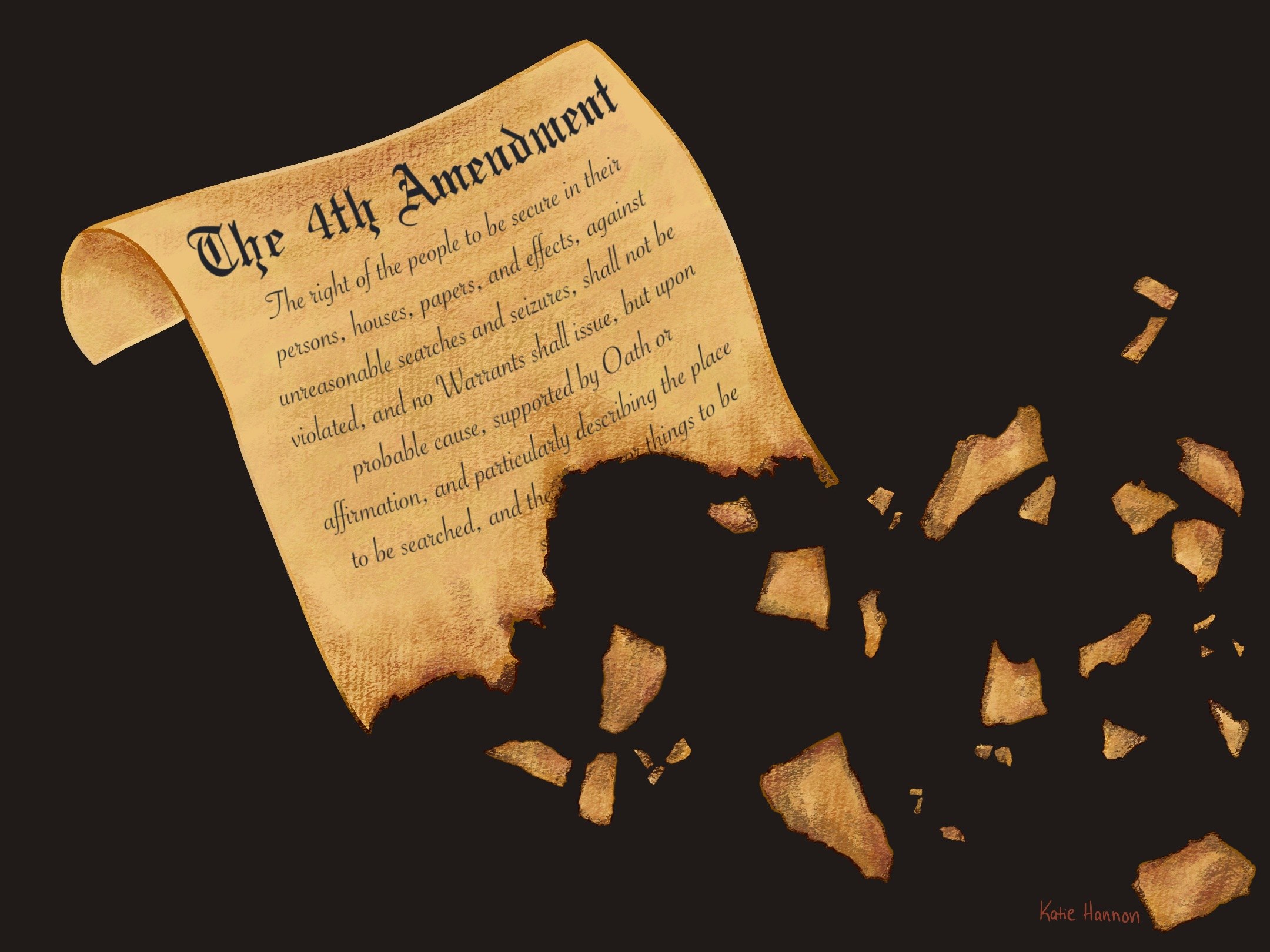
My experience was not the result of a rogue officer or overzealous agency; it was the predictable product of a system that has steadily expanded its power for decades in the name of national security. Most of us don’t realize it’s there, like a crocodile hiding under the wavy glimmer of American society, stealthy and unseen until suddenly it strikes: a system easy to ignore, until it turns its attention towards you. But by then it’s far too late, as I learned firsthand. The only way to prevent continued abuses by the national security system is to abolish the legal architecture that makes it possible. End warrantless border searches of Americans’ digital devices. Repeal Section 702. End administrative subpoenas that bypass judicial review. Prohibit government purchases of commercial surveillance data. Restore the Fourth Amendment as an actual limit on government power, not an inconvenience to be worked around. If we fail to do so, the surveillance state will continue to grow until none of us has any meaningful privacy left to lose.